Author: Chris Newman

  • Help Ukraine (and save a diesel!)

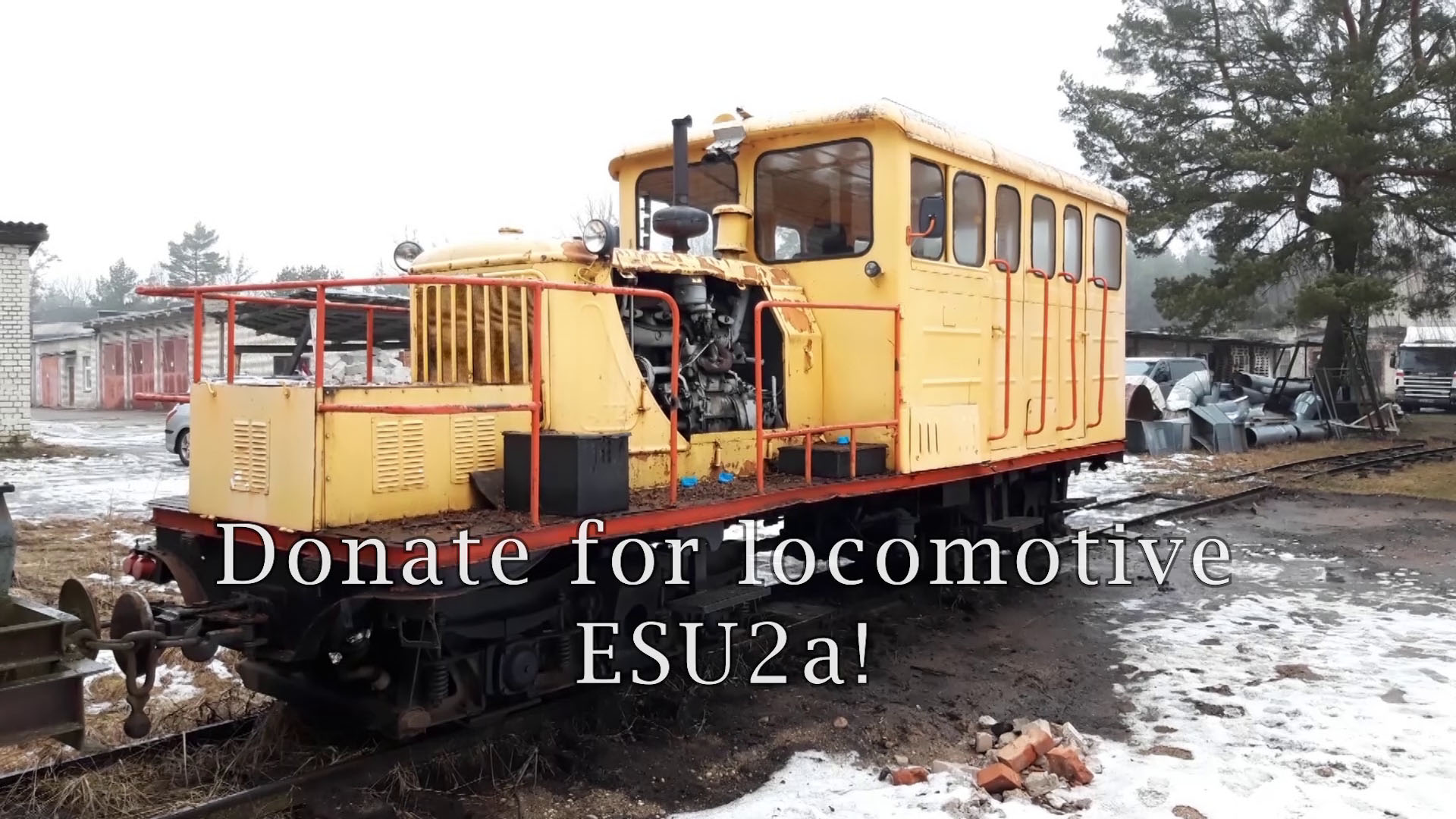
    Dāvis Bušs, our member from Latvia, is seeking donations to save a diesel-electric locomotive fitted with a 50kW diesel generator that is big enough to power really large consumers such as a hospital, etc.  After the war, it would become a museum exhibit.

    A summary of the project can be found at http://kudrasbanitis.lv/index.php/en/projects/187-locomotive-esu2a-for-ukraine including a short video presentation.

    Dāvis wants us to help to spread the news of the campaign to a wider audience, so members are asked to oblige by telling their friends, associates, and their societies about it.

    Donations can be made through www.ziedot.lv.  The appeal hopes to raise €10,000 to purchase the locomotive plus an additional €7000 to repair its brake gear to bring it back to running condition and to move it from its present location in Lithuania.

    A dedicated Facebook page for the project can be found at https://www.facebook.com/100091799957731/posts/114435088293156/?mibextid=rS40aB7S9Ucbxw6v.

    Post Script:  Dāvis attended a steam event in Ukraine last February (2023), visiting Haivoron city and taking part in their local tourism event on the narrow gauge railway.  There he took the photo below of Ukraine Railways’ 0-8-0 narrow gauge steam locomotive No. Gr-280.  Dāvis points out that during these hard times, it is important to cheer up Ukranian society with some positive events.  He also mentions that the event took place during air raid alarms!

    A charming 2021 video of the railway can be found at https://www.youtube.com/watch?v=AUQKp4l-DWg.
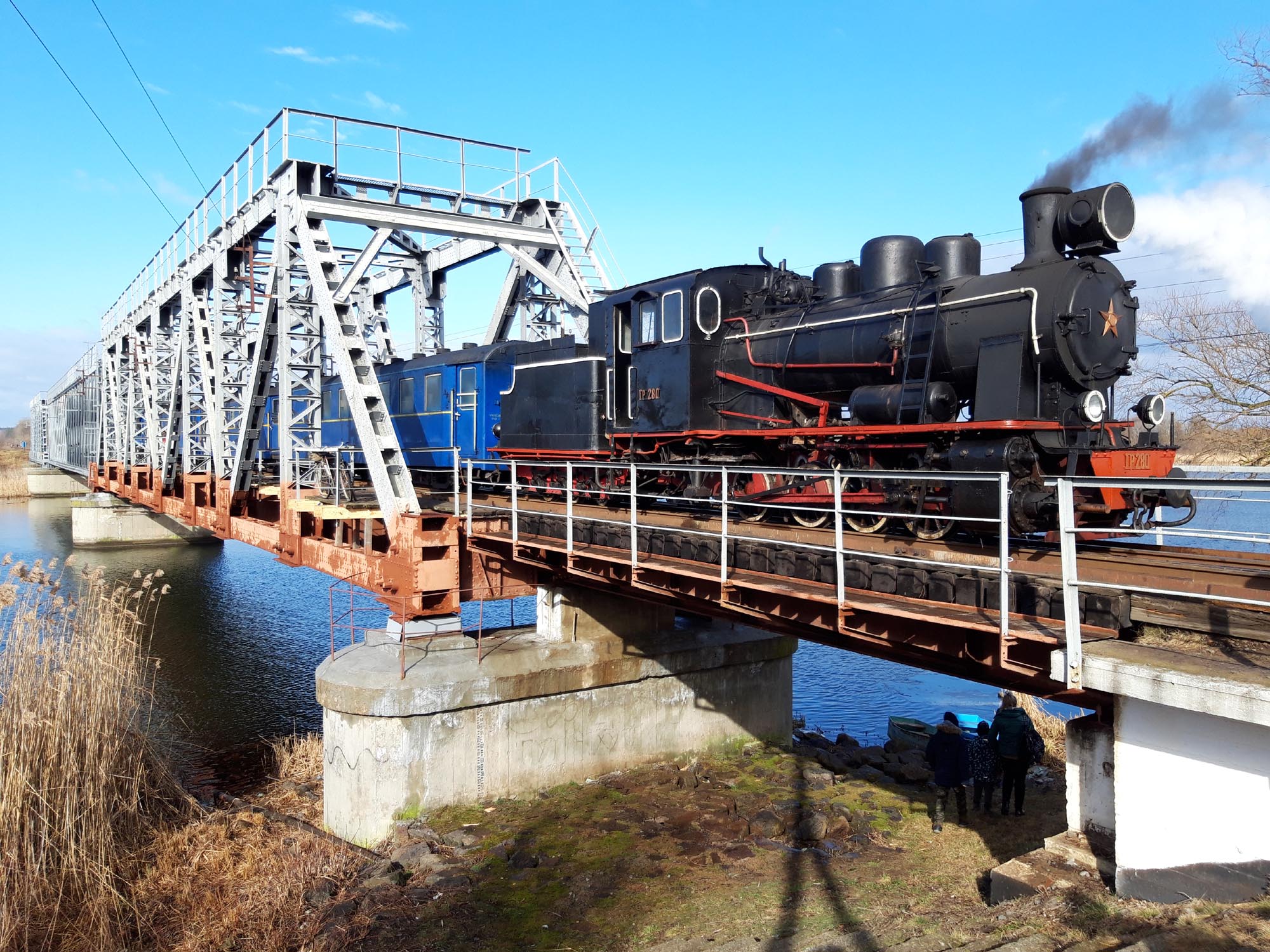
    Ukraine Railways’ 0-8-0 narrow gauge steam locomotive No. Gr-280 (photo © Dāvis Bušs)
  • Revolution Page updated

    In case you’ve not found it, please be aware that our “Revolution” page has been updated with the latest news of the project.  Please take a look and, if possible, make a contribution towards its cost.

  • March 2023 Newsletter released

    In case any members are not receiving our emails, our Newsletter editor, Iain McCall, has today (21/11/23) circulated the March 2023 edition of our Newsletter.  Filling 57 pages, it contains our usual updates on ASTT’s membership and activities, plus three articles of great interest:

    • Derivation of the Locomotive Energy Balance by Martin Johnson,
    • Cylindrical Fireboxes—Sorting Out the Circulation Problem by Robin Pennie, and
    • The Physiology of the Locomotive Boiler—Another Peep! by Adrian Tester.

    If you have not received a copy of this Newsletter, please let us know by writing to info@advanced-steam.org.  In the meantime, a copy of this and all earlier Newsletters can be downloaded from the Newsletter page of the Members’ section of our website.


  • November 2022 Newsletter released

    In case any members are not receiving our emails, our Newsletter editor, Iain McCall, circulated the November 2022 edition of our Newsletter this afternoon (20th November 2022).  Filling 42 pages, it contains several interesting articles in addition to our usual reports on ASTT’s membership and activities.

    If any member has not received a copy of the Newsletter, can he please let us know by writing to info@advanced-steam.org.  In the meantime, a copy of this and all earlier Newsletters can be downloaded from the Newsletter page of the Member’s section of our website.


  • ASTT’s 2022 Conference – Darlington – 15/16 October

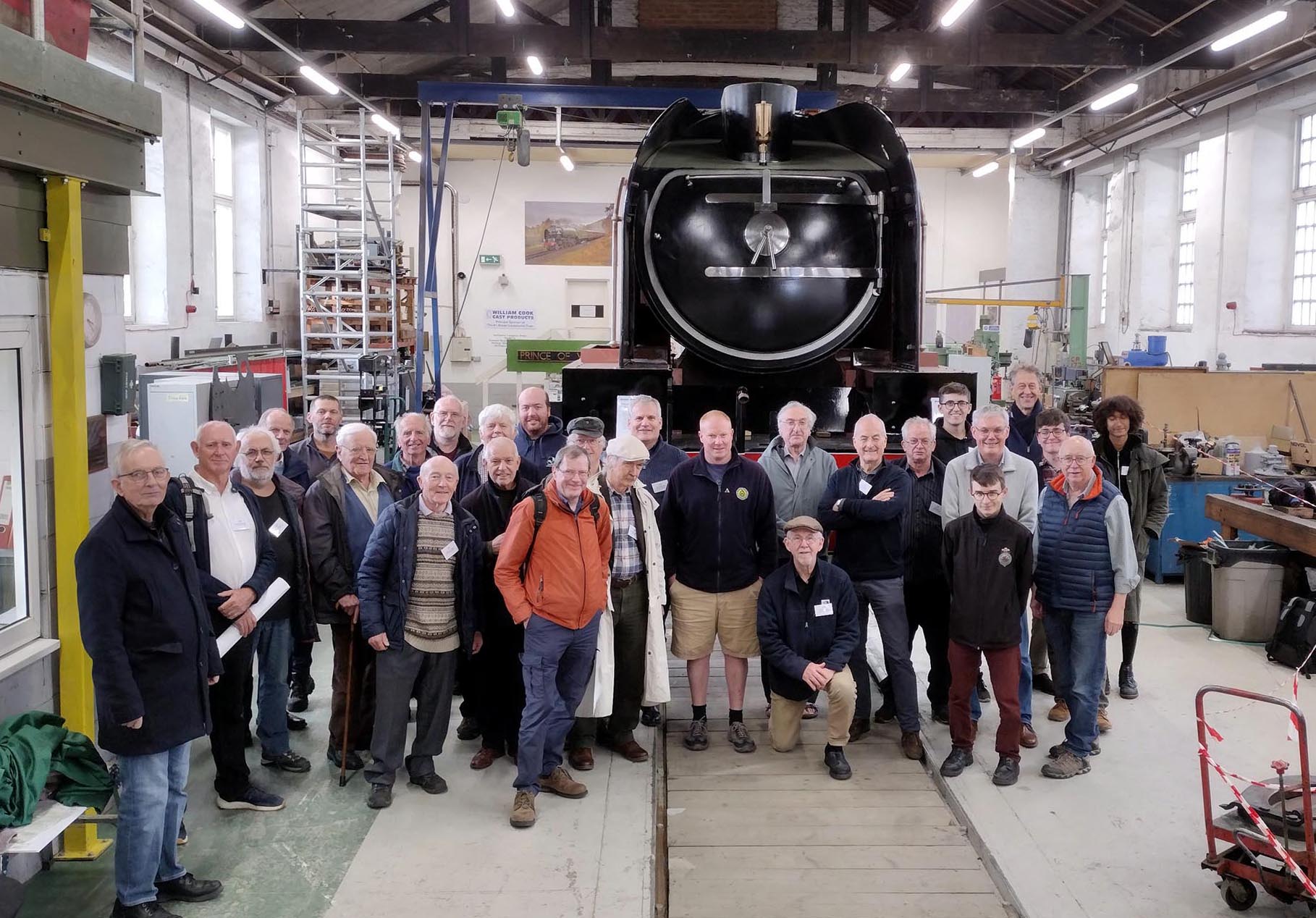
    ASTT members at the A1 Steam Trust's Workshop

    ASTT’s 2019 Conference was successfully held at the Head of Steam museum in Darlingon over the weekend of 15/16 October with 28 members in attendance.  This was a significant increase on our 2021 Loughborough conference, but numbers were constrained by concerns about rail travel because of the recent propensity for strikes.  Covid caused at least one member to cancel his plans to attend, and ongoing concerns about the virus probably deterred others from attending.

    Nine papers were presented covering a wide range of subjects, and a visit was included to the A1 Steam Trust’s workshop to view their magnificent P2 2-8-2 No 2007 “Prince of Wales”, as shown in the above photo.

    More information can be found on ASTT’s website from where members can access a members-only page with links to the PPT presentations (in PDF format).  Unfortunately, no video recordings were made of the presentations.


  • ASTT releases 1st Volume of its “Centenary Compendium” to mark L.D. Porta’s 100th birthday – 21st March 2022

    Today, 21st March 2022, marks the 100th birthday of Livio Dante Porta, the Argentinian engineer who took over the mantle from Chapelon in continuing the development of steam locomotive technology through to the end of the 20th century and on to his death in 2003.  ASTT is celebrating his centenary by releasing the first volume of a “Compendium of Articles and Papers” about the great man.

    This first volume contains 230 A4 pages and can be purchased directly from ASTT via its book sales page for a price of £21.60 for members (or £27 for non-members).  All profits from the sale of the book will accrue to ASTT to help further its work in the ongoing development of steam technology and in the promotion of Porta legacy.

    Those who have already placed orders for the book should receive their copies within the next week to 10 days.

  • Shaun McMahon: 1964 – 2022

    Shaun McMahon standing beside Santa Fe No 107 at Rio Turbio in 2005. © Chris newman

    We are deeply saddened to report the untimely death of Shaun McMahon.  It is understood that he died in Buenos Aires from complications associated with Covid.

    Shaun began his railway career on the Ffestiniog Railway, joining the permanent staff there as a trainee technician engineer in 1984 when Phil Girdlestone was Works Manager.  Thus began a working relationship between the two of them that continued up until the time of Phil’s death in 2016.

    Shaun moved from the FR to the Vale of Rheidol Railway in 1989, becoming heavily involved in boiler water treatment schemes on various UK preserved lines.  At this time he formed “Day McMahon Steam Technical Services” with Nigel Day.  A number of successful locomotive redraughtings were carried out by the partnership.

    In 1994 Shaun became Assistant Mechanical Engineer to Girdlestone on the Alfred County Railway in South Africa, continuing on there until 1999 when he moved to Argentina as Technical Manager for the Argentine railway development company Tranex Turismo S.A.  He was subsequently employed by Tranex as Technical Projects Manager at the Ferrocarril Austral Fueguino on Tierra del Fuego (FCAF).  This 500 mm gauge railway has become well known for its innovative program of steam loco development for hauling tourist trains over its 7km of steeply graded track.

    Shaun must have had good language skills because he quickly picked up Spanish and was fluent in the language within a few years. 

    In his early years in Argentina, Shaun benefited from the guidance of Livio Dante Porta and was frequently charged with getting Porta’s ideas translated into hardware, particularly on the FCAF railway.

    From 2009, Shaun worked for INTI, the government scientific establishment in Buenos Aires where Porta had been head of the Thermodynamics Department from 1960 (when he left the Rio Turbio Railway) until his retirement in 1982.

    In recent years, Shaun had been working on the restoration of an Argentinean North British-built Class 8A 2-6-2T No. 3351 dating from 1906.  He had also been busy supervising the restoration of two of the Rio Turbio 2-10-2s which he planned to return to Rio Turbio to haul tourist trains and perhaps even coal trains over the railway.  One (No 119) was being restored to Porta-modified condition while the other (No 120) was to be upgraded to incorporate later advances in steam technology.  (No 107, featured in the photo above, has already been restored to its original ex-Mitsubishi as-built condition.)

    Shaun was only 57 years old.  His untimely death leaves a big hole in the “modern steam” community in South America that will be difficult to fill. 

    He is survived by his wife Betti.

    Chris Newman
    3 Feb 2022

  • Further bio-coal trials at the Bure Valley Railway.

    The Bure Valley Railway, Advanced Steam Tractions Trust and the Heritage Railway Association have held a further set of trials to test bio–coal under more arduous working conditions.

    The first set of trials took place in June and tested the fuels under normal Bure Valley train operating conditions.

    The objective of the second trials was test the fuel under more arduous working conditions and also try it on a second engine, extending the knowledge base of how the fuels perform under different working conditions and on other locomotives.

    The trials, a cooperation between the Bure Valley, Advanced Steam Traction Trust (ASTT), and the fuel manufacturers Coal Products Limited (CPL) took place over two days, Tuesday 23rd November and Wednesday 24th November.  The morning departures to Wroxham burnt the Welsh coal from Ffos-y-fran as a base comparator and the afternoon’s burnt a variant of Ecoal50 developed by CPL based on the feedback from the June trials.

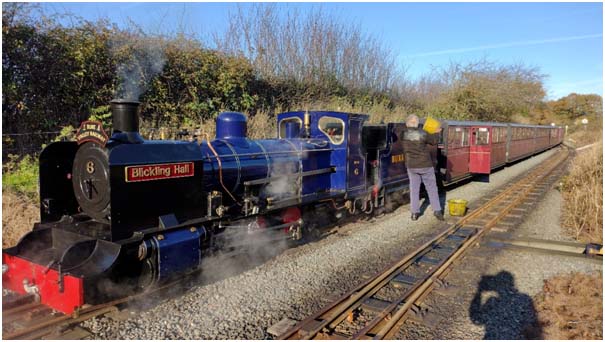
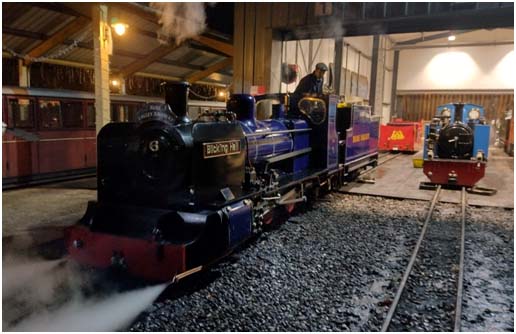
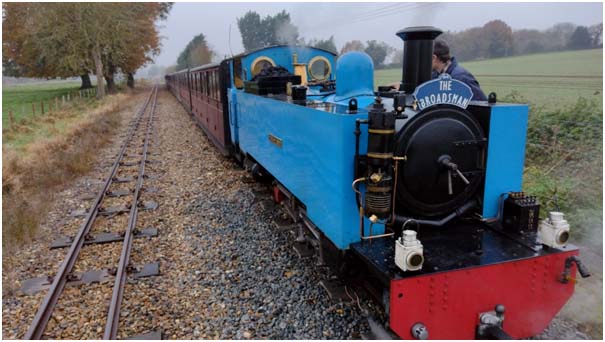
    The Tuesday trial used the previous test locomotive No. 6 “Bickling Hall” which is fitted with a Lempor exhaust and Wednesday used No. 1 “Wroxham Broad”, which is fitted with a conventional exhaust.  No. 6 had been used in the June trials.

    The trials with No. 6 increased the load to 180% of the normal BVR load to really test the locomotive under the most arduous combustion conditions that are found on the mainline or Welsh narrow-gauge railways.  No. 1 was loaded to 113 % of what it would normally haul.

    The trials with No1 gave an opportunity to test the fuel on a different locomotive, which is smaller than No. 6 and also due for its 10-year overhaul in 2022.

    Scott Bunting was the driver for these trials and the June trials.  On both days the railhead conditions were not ideal, with leaf contamination on the Wednesday, and with No1 the additional complication of light drizzle. Both locomotives were working at the limit of their adhesion even with the use of sanding and were a test of driver skill.

    The test protocol was the same as in June with the fuel in the tender weighed and the water consumption measured.  The ash in the ash pan and the char in smokebox were also weighed. Transducers were rigged to a computer in the lead carriage to measure smokebox vacuum, which gives an indication of maximum combustion rate, exhaust performance, and speed.

    ASTT produced the test protocol, provided the test equipment and supervised the trials and CPL attended the trials to see at first-hand how the fuels performed.

    There now comes a period of more detailed analysis and discussion with CPL.

    Ian Gaylor loading Bickling Hall with a measured quantity of Ecoal50
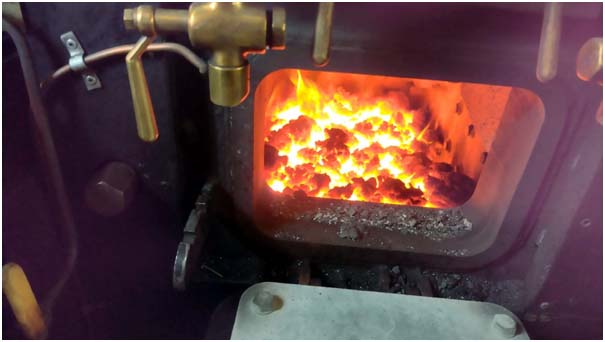
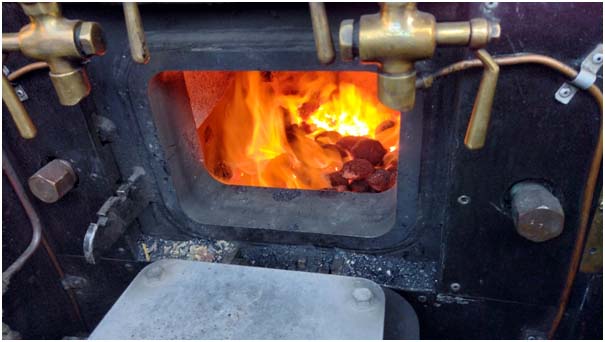
    Ffos-y-fran in the firebox of No. 6
    Ecoal50 in the firebox of No. 6
    No. 6 Bickling Hall coming on shed after the first day of trials
    No. 1 Wroxham Broad
  • Porta Papers Volume 3 – Now on Sale

    After a few set-backs and delays, ASTT’s latest publication “Selection of Papers by L.D. Porta – Volume 3” is now available for purchase through this website.

    It features 19 papers formed into three groups under the headings: Boilers, Fireboxes and Combustion. Full details can be found on the book’s sales page.

    This is the third volume to be published, the three volumes forming a matching set. Filling 290 pages, Volume 3 is slightly longer than Volume 1 (244 pages) and Volume 2 (250 pages), but it is offered for the same price: £27 for non-members and £21.60 for members, both including UK postage. Additional postage charges apply to buyers outside Europe.

    Members can order a copy of the book from the members’ page but will need to be logged in to access it.

    The topics of some of the papers may seem a little esoteric at first glance, but it is expected that most readers will find interest in all of them, and challenges in some!

    Please note that all proceeds from the sales of this and other ASTT titles are accrued by ASTT for the purpose of enhancing the future of steam traction through its further development.

  • Steam ship returns to Switzerland with new engine

    The DS Spiez has returned to lake operation in Switzerland, equipped with a brand new V-2 steam engine designed and built by Roger Waller through the auspices of his DLM company.

    A video of the ship on test can be seen at https://www.youtube.com/watch?v=-MZVIFrvIP4.  The German description of the video says:

    “During this trial, the new steam engine, built by the steam locomotive and machine factory DLM, was operated remotely from the wheelhouse for the first time. A PLC controls the hydraulic cylinders for operating the regulator, reversing and the cylinder drainage valves.

    Because the DS Spiez is required to operate backwards for long periods in the Thun Canal, backward running was also tested extensively.”

  • George Carpenter dies

    Radio 4 listeners will have been saddened today (28th Jan 2020) at the news of the death of Nicholas Parsons at the grand age of 96.  By a sad coincidence, Vyvyan Vickers has just reported that George Carpenter died yesterday (27th Jan) also at the age of 96.  Vyvyan reports as follows:

    “George was born in 1923 and had read the Railway Magazine since 1933 when he was 10.  After the War, he made a lot of contacts both in the UK and particularly in France.  He worked tor a long time with Kenneth Cantlie and in succession to him presided over the Bevil’s Lunch Club from the late 1970s to the mid 2010s.

    He knew Dante Porta and worked with Chapelon whose “La Locomotive a Vapeur” he translated.  He had a remarkable memory and an exceptional head for mental arithmetic. He was also a very decent man, definite without being discourteous.”

    Vyvyan will be collecting memories of George from members of the Bevil’s Club which, with his permission, will be recorded on this website.  Hopefully a photograph of him might also be found.


  • ASTT assists HRA on Carbon Emissions and Offsets

    In response to an August 2019 article in The Railway Hub drawing attention to the threat of a government crackdown on the burning of coal on heritage steam railways, ASTT approached Steve Oates of the Heritage Railway Association (HRA) to offer assistance in preparing a submission to a government inquiry into “carbon offsetting in transport“.

    The HRA had already been working in close cooperation with the All-Party Parliamentary Group on Heritage Rail (APPG) which in July 2019 had prepared a report titled “Steaming Ahead” which focussed on the availability of good quality coal needed to maintain the heritage railway industry.  The report raised a number of concerns, including:

    “The United Kingdom, its regional economies, its tourism industry and the future skills base of the mainline rail sector need their heritage railways, and the core requirement for most of the railways is the steam locomotive, which in turn require good quality coal. The best type of coal for these locomotives is that mined in Britain and these mines do not have a medium or long term future, so how do we ensure the future of this thriving and important sector?

    “Concerns about climate change have rightly led to moves to reduce the burning of fossil fuel, but the intention of Government was not to stop people enjoying the experience of seeing and riding behind a working steam locomotive. In this classic case of the law of unintended consequences, we need to find a way to enable heritage railways to continue steaming into the future. We intend to pursue this with the Government departments and ministers involved over the next few months.”

    The 28-page APPG report was summarised in a press release dated 18th July 2019.  At the same time, HRA published its own 5-page bulletin on the APPFHR report.

    In October 2019, ASTT took the opportunity to bolster HRA’s response to the government’s inquiry into carbon offsets, by undertaking its own statistical analysis of heritage rail emissions.  This concluded that heritage steam’s CO2 output is insignificant in comparison to the UK’s total carbon emissions, amounting to just 0.02% – i.e. one part in 5000 – of that total, and even less when compared to total emissions of “carbon-equivalents”.

    ASTT also estimated that the application of carbon offsets to mainline excursions might add an average of no more than £2 per ticket.  Whilst it is more difficult to estimate fare increase that might apply to heritage line operations, it can be estimated that carbon offsetting might add a cost of 10p per seat-mile, or perhaps £2 per return ticket over a 10-mile railway.